
How Does the Behavior of the Sado Dolphins Change with the Arrival of Fall?
When the days begin to grow shorter and the hustle and bustle of the summer months gives way to serenity, the landscape of the Sado Estuary and the Arrábida Mountains is transformed. The temperature becomes milder, the beaches empty out, and the sea takes on an almost mirror-like quality.
Many visitors often wonder: with the end of summer, do the dolphins still stay around?
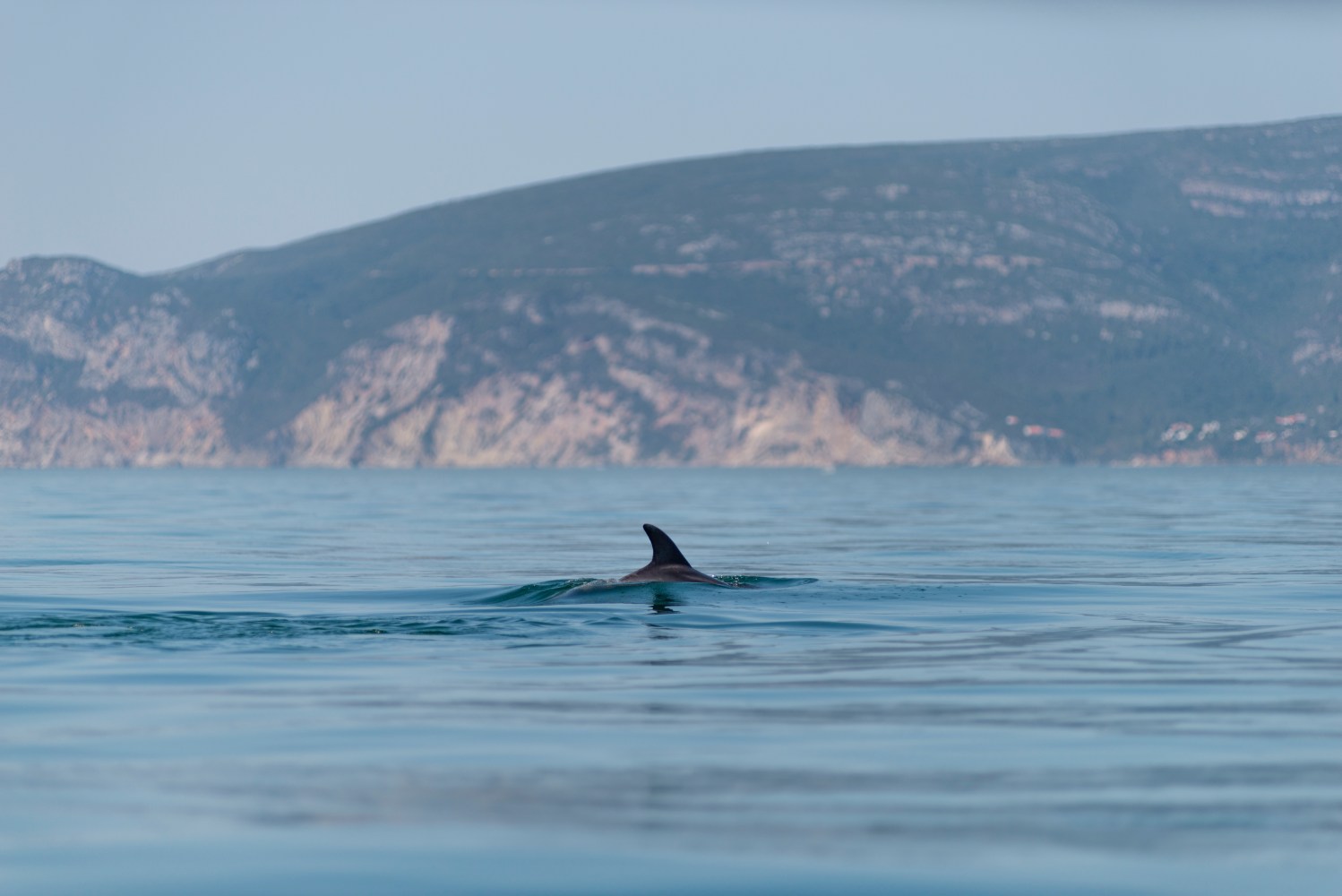
The answer is yes. The community of bottlenose dolphins (Tursiops truncatus) in the Sado Estuary is one of the few resident dolphin populations in all of Europe that lives in an estuary. This means that this bay is their home 365 days a year.
However, the transition to fall brings fascinating changes in the way these animals interact with one another, hunt, and navigate the region’s waters.
1. The Decline in Maritime Traffic and the Changing Dynamics
During the months of July and August, the Sado Basin and the Arrábida coast experience a high volume of recreational boating. Although the porpoise community is accustomed to human presence, the constant noise from engines requires the animals to be more vigilant.
With the arrival of fall and the sharp decline in boat traffic, the underwater acoustic environment changes:
- Smoother navigation: The absence of background noise allows dolphins to communicate over longer distances through their echolocation clicks and whistles.
- More relaxed behaviors: Without the pressure of maritime traffic, it is common to observe groups swimming more slowly and relaxed, spending long periods in shallow waters near the beaches of Arrábida and Tróia.
2. Fall Feeding and Movement Patterns
The feeding dynamics of the bottlenose dolphin community are directly influenced by the availability of their prey. In the fall, as currents and water temperatures change, various species of fish and cephalopods (such as cuttlefish and squid) redistribute themselves within the estuary.
| Driver of Change | Impact on Dolphin Behavior |
| Prey Migration | Bottlenose dolphins adjust their daily hunting routes, alternating between the interior of the estuary and the outer coastal zone of Arrábida. |
| Group Hunting Tactics | It is during this time that highly elaborate cooperative hunting strategies can be observed, in which several individuals surround schools of fish in shallower areas. |
| Closer to the Coast | In search of food, it is not uncommon to see the pod hunting just a few meters from the coral reefs and limestone slopes of the Natural Park. |
3. Social Structure and the Community’s Calves
Fall is also a time of great social cohesion for the Sado river dolphin family. After the calving season (which occurs mainly in late spring and during the summer), the juveniles are now in an active learning phase.
The calm waters of late summer provide the ideal setting for mothers to teach their calves to hunt, leap, and socialize with other members of the group. For those observing from a boat, seeing a mother swimming side by side with her calf on a completely mirror-like sea is one of the most memorable experiences that local nature has to offer.
4. Why Go Dolphin Watching in the Fall?
If you’re looking for an authentic connection with marine life, fall is widely considered by biologists and local sailors to be one of the best times of the year to sail on the Sado River:
Se procura uma ligação autêntica com a vida marinha, o outono é amplamente considerado por biólogos e marinheiros locais como uma das melhores épocas do ano para navegar no Sado:
- More Intimate Encounters: The lower density of boats around the pods allows for extended observations, always in accordance with the rules of conduct and safety distances.
- Unparalleled Light and Photography: The golden autumn light in the late afternoon creates perfect contrasts between the Serra da Arrábida and the crystal-clear water, ideal for photography enthusiasts.
- Mild climate: October temperatures on the Setúbal Peninsula remain very pleasant, offering comfortable crossings without the stifling heat of the height of summer.
Experience the Magic of the Sado with Rotas do Sal
Observing the Sado’s dolphins in their natural habitat is a privilege that requires knowledge, sensitivity, and deep respect for the ecosystem. At Rotas do Sal, our tours are led by guides who know every corner of this bay, ensuring sustainable navigation that always prioritizes the well-being of the local community.
Whether you’re coming with family, friends, or on a romantic getaway for two, fall is ready to show you the most serene and magical side of Setúbal. Check our tour calendar and secure your spot on board.